USE OF MINI IMPLANTS IN ORTHODONTICS
Writes: Spec. Dr. Aliki Lazarevska
The use of temporary anchorage devices in orthodontics is probably the most important advancement in orthodontic practice in recent years and they are now widely used in everyday clinical practice. Many different systems of mini implants have been developed in order to ensure safe skeletal anchorage and to avoid the use of cumbersome appliances which are uncomfortable for the patient. Today mini implants represent a routine, safe and efficient method for orthodontic movement of teeth. Simplified protocols for placement and wide variety of uses in different orthodontic anomalies make them an essential part of everyday practice and frequently eliminate the need for dental laboratory.
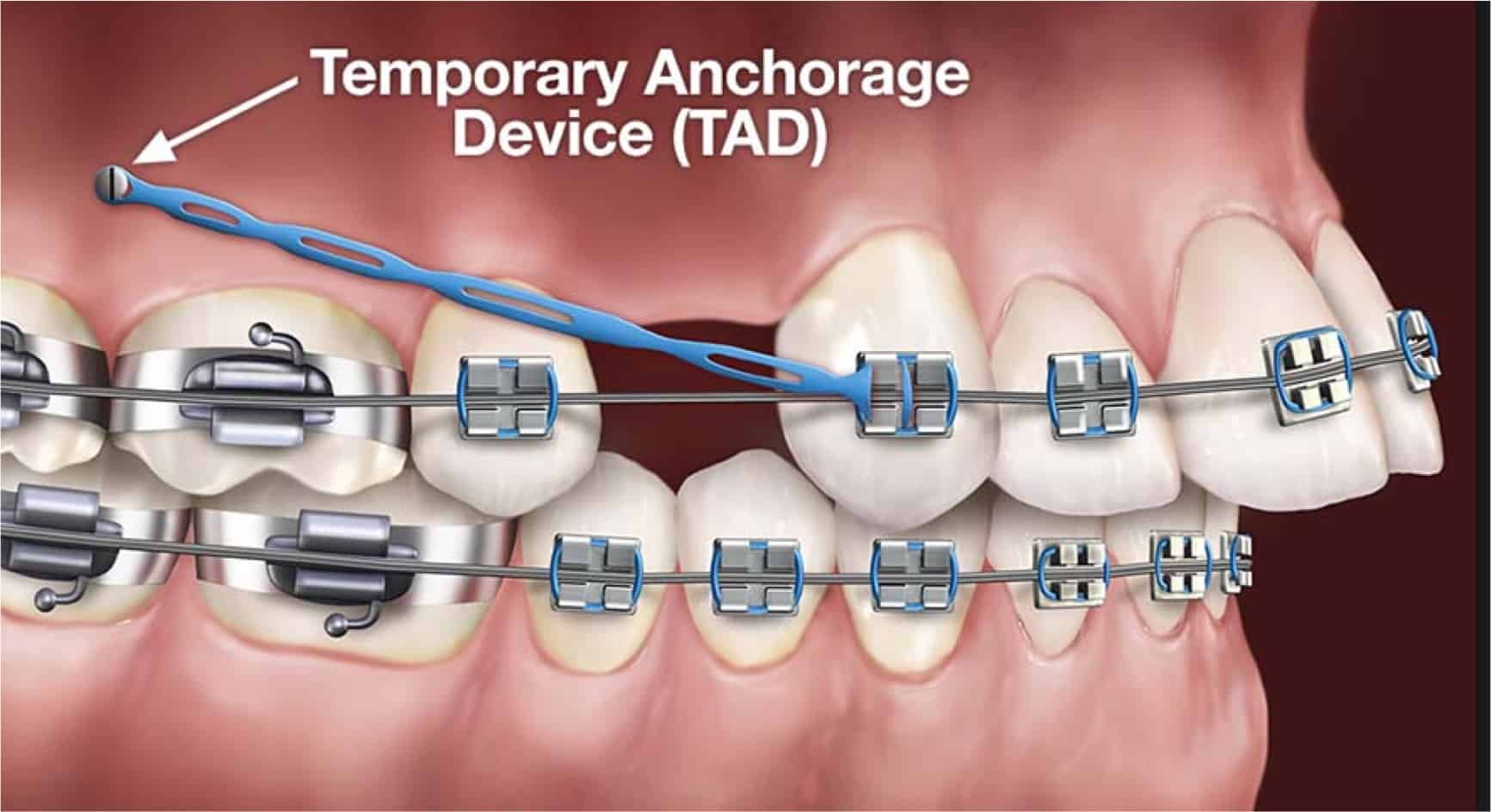
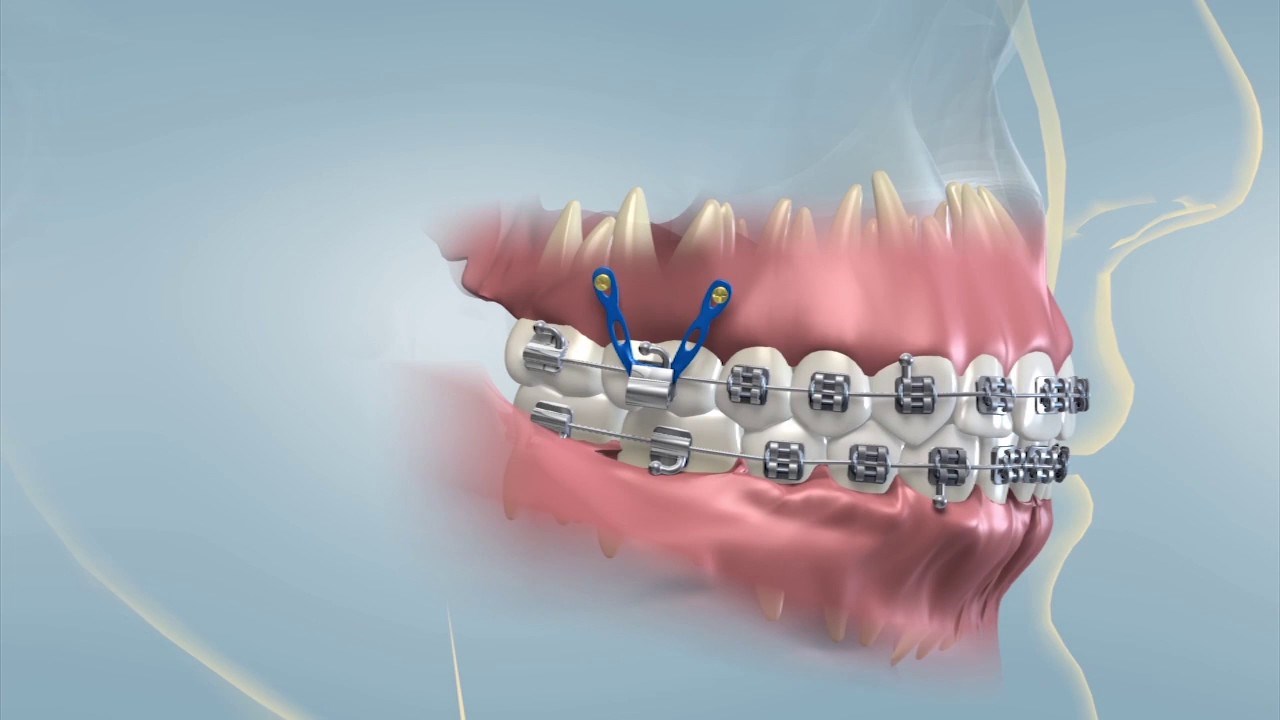
Similar to dental implants which are widely used as replacement for missing teeth, mini implants are small screws (1,5-2mm in diameter) made from titanium alloy. But unlike dental implants which are meant to be integrated in the bone, the mini implants are temporary-they stay in the mouth for several months and they are removed when they are no longer needed. They are usually placed between the roots of the teeth. Their purpose is to establish a stable anchorage for orthodontic movement of teeth in the desired direction and avoid undesirable tooth movements. Why is anchorage so important in orthodontics? For every force of action there is an equal and opposite force of reaction. This basic law of physics applies to orthodontic movement of teeth as well. In orthodontic therapy this means that movement of one tooth or group of teeth in one direction prompts equal movement of the anchorage teeth in the opposite direction which is usually not desirable. Mini implants eliminate the need for using the teeth as anchorage, thus making the therapy easier, faster and more efficient.
Mini implants are especially useful in the treatment of vertical problems such as open bite or excessive eruption of teeth due to loss of an opposing tooth. These teeth were formerly treated with root canal therapy and grinded in order to correct the vertical excess. With the use of mini implants, these teeth can now be intruded and treated without root canal treatment or grinding. Mini implants are also very successful in treatment of gummy smile, because they can ensure intrusion of upper front teeth and esthetic correction of the gummy smile. With proper diagnosis and indication, skeletal anchorage with mini implants can be used in almost all types of malocclusions.
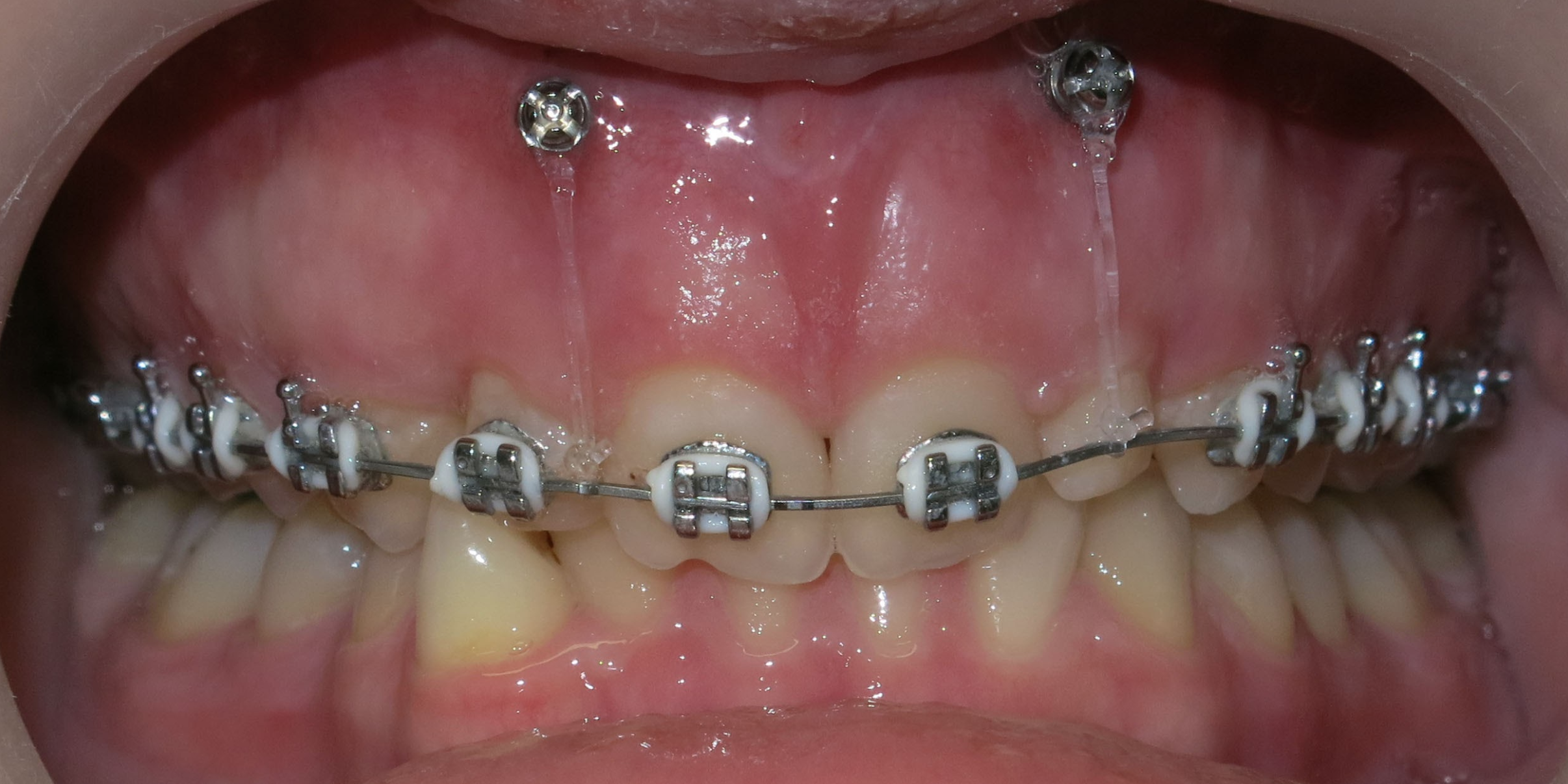
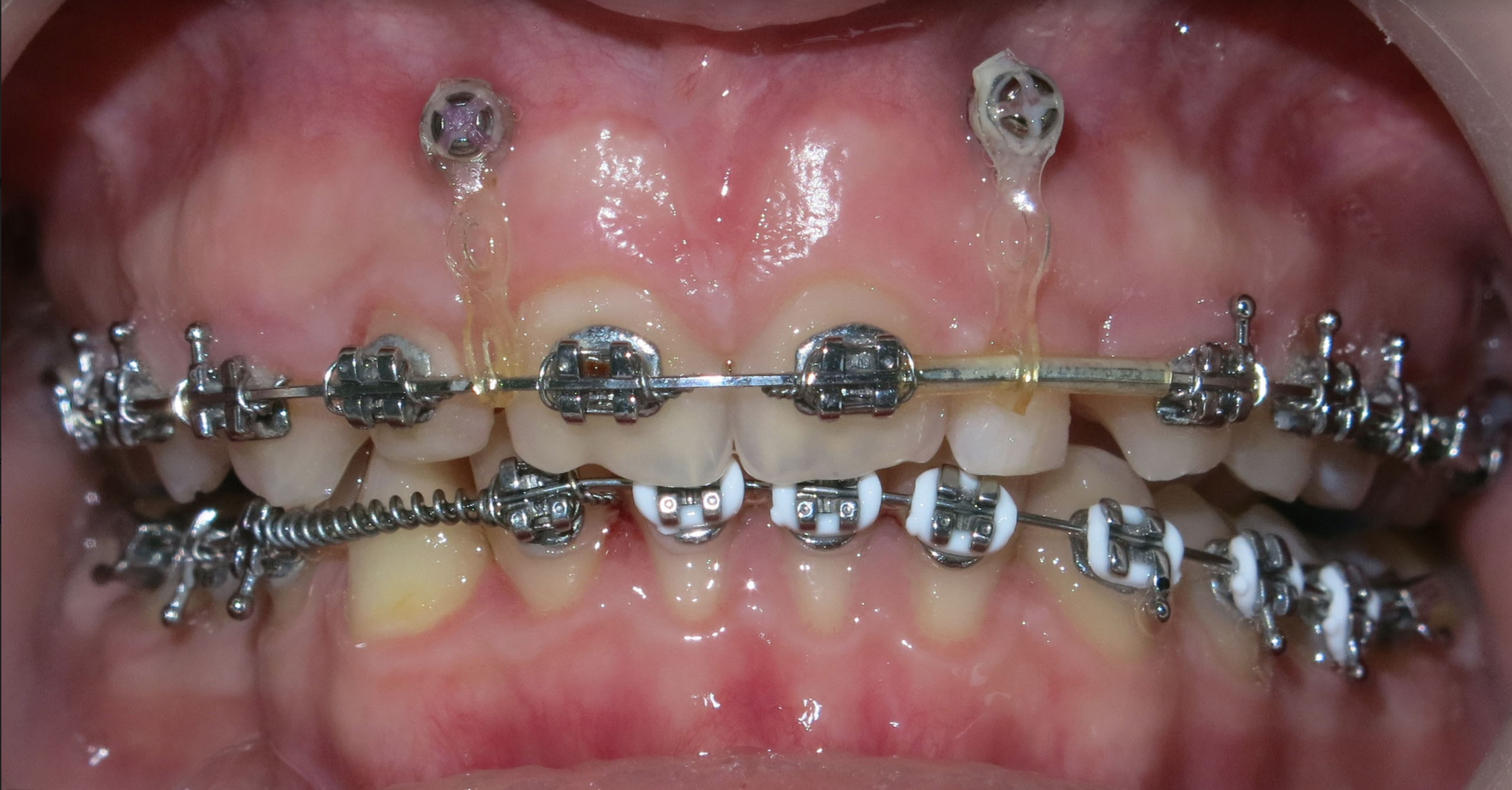
On the picture is presented a patient of ours with gingival smile treated with mini implants, where intrusion of upper front teeth is accomplished in several months
The use of mini implants offers multiple advantages:
· they eliminate the need for cumbersome appliances which are made in the dental laboratory and are uncomfortable for the patient;
· they can reduce the need for intermaxillary elastics which require patient cooperation;
· they enable orthodontists to treat more complex cases and sometimes even avoid the need for orthognatic surgery.
PLACEMENT OF MINI IMPLANTS
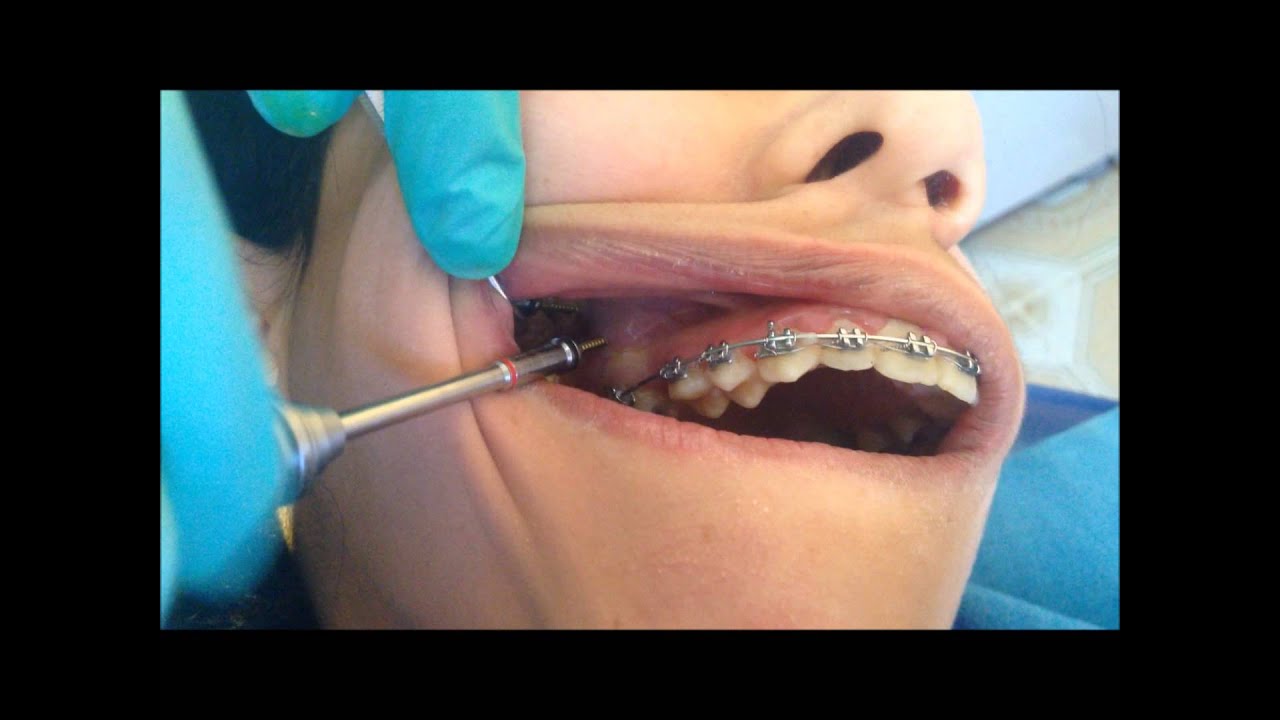
The placement of mini implants is a minimally invasive and painless procedure. After the application of local anesthetic, the patient feels only a gentle pressure when the screw is placed. The whole procedure takes approximately 15 minutes. After the procedure, the patient can take a mild painkiller, although most patients do not feel any pain. The mini implants do not need special maintenance while they are in the mouth, it is only necessary to keep excellent oral hygiene. When they are no longer needed, they are removed very easily by unscrewing the mini implant without anesthetic.
Schedule your visit today.
Easily access our services via phone or our
online contact form if you have any questions
or would like to schedule an appointment.
Our team will reply to you as soon as possible.