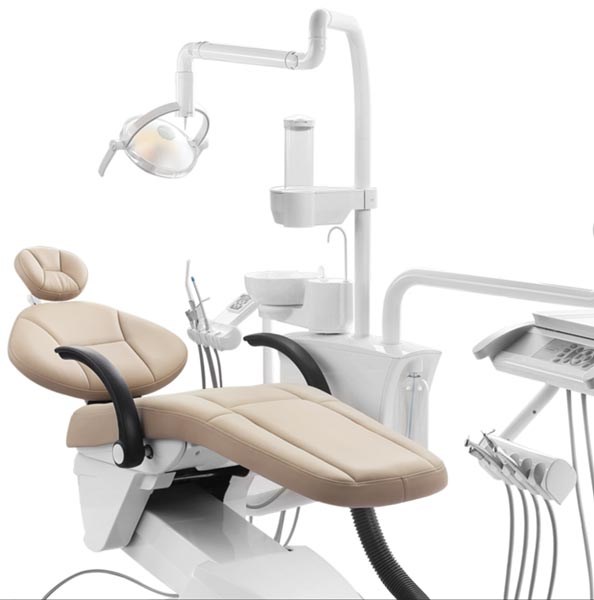
Dental Laser
Laser dentistry is a contemporary method that uses lasers and it is most commonly used for treating and shaping the gums, root canal treatment, oral surgery interventions
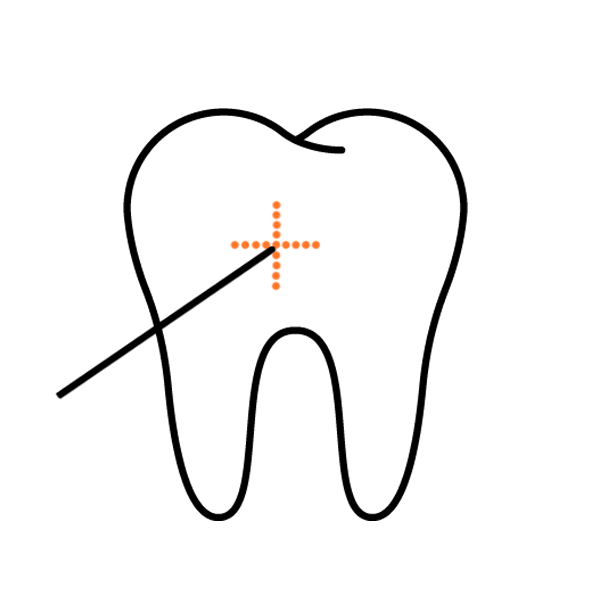
Laser dentistry is relatively
new approach in performing dental procedures which includes the use of lasers
to treat a number of different dental conditions. It became commercially used
in clinical dental practice from 1980s.
Laser dentistry potentially offers a more comfortable treatment option for a number of dental procedures involving hard or soft tissue compared to drills and other non-laser tools.
LASER stands for “light amplification by the stimulated emission of radiation.” The instrument creates light energy in a very narrow and focused beam. This laser light produces a reaction when it hits tissue, allowing it to remove or shape the tissue.
In our office laser dentistry is used in a variety of procedures, including:
•treating hypersensitivity
•treating gum disease
•disinfection while root canal treatment
•gum lift (gingivectomy) etc.
•cavity detection
•crown lengthening
•herpes and aphthae treatment
•minor surgical interventions
Lasers can make dental treatments more efficient, cost effective, and comfortable.
What will happen?
Dental laser treatments are largely indicated for different types of dental procedures. However, almost all of the procedures require proper local anesthetic. After the local anesthetic is administered, protective eye glasses will be given to the patient and the doctor as well as to the assistant. All other individuals will be asked to leave the room out of safety reasons.
Post treatment
It is expected that the patients gums are darker in the days that follow until the epithelium revitalizes. Pain is not expected after the treatment and some of the patients will be given gingival gels for faster reepithelization. It is important to emphasize that the success of laser treatments are variable and are individually dependent. In some cases the procedures may need to be repeated.
1. What is laser dentistry?
A laser is technological device which produces a beam of concentrated light bringing in energy into a patient's mouth, thus, sterilizing the infected area and sealing blood vessels minimizing pain or blood loss. This helps the dentist in doing the treatment with more efficiency and accuracy. Laser dentistry is a hassle-free treatment. In many cases, even the need of anesthetic injections is reduced.
2. Why should one choose laser dentistry?
Laser dentistry has two major benefits. One is that, it makes the treatment more precise and accurate for the dentist. The second is that it reduces the pain as well as blood loss, during the process and after it.
3. What are the procedures that can be done with laser dentistry?
There are numerous procedures that can be done with laser dentistry, such as gum reshaping, teeth whitening, detection of cavities, disinfection and so on.
4. What is the recovery time after laser dentistry treatment?
The time of recovery depends on the procedure type, the body type and how does the individual heal after any injury or surgery, and so on. But in most of the cases, the recovery time is very short.
5. How accurate are the lasers?
The main reason that lasers are being used in dentistry is that they increase the level of accuracy and also the size of incisions is also reduced to as less as one-fifth of a millimeter across. Laser tools are more accurate.
6. What are the benefits of laser dentistry?
There are various benefits of laser dentistry:
•A dentist does not use a drill, thus making the procedure less-painful for the patients
•In many cases, the use of anesthesia is also reduced
•The user of laser makes the process more precise
•In comparison to the older treatments, the recovery time is also faster.
•Reduction in the amount of bacteria in diseased gum tissue as well as tooth cavities
•Less loss of blood during and after surgery
7. Is laser dentistry safe?
Absolutely. One of the aims of introducing laser treatment in dentistry is improving the safety and quality of the procedures.
Schedule your visit today.
Easily access our services via phone or our
online contact form if you have any questions
or would like to schedule an appointment.
Our team will reply to you as soon as possible.