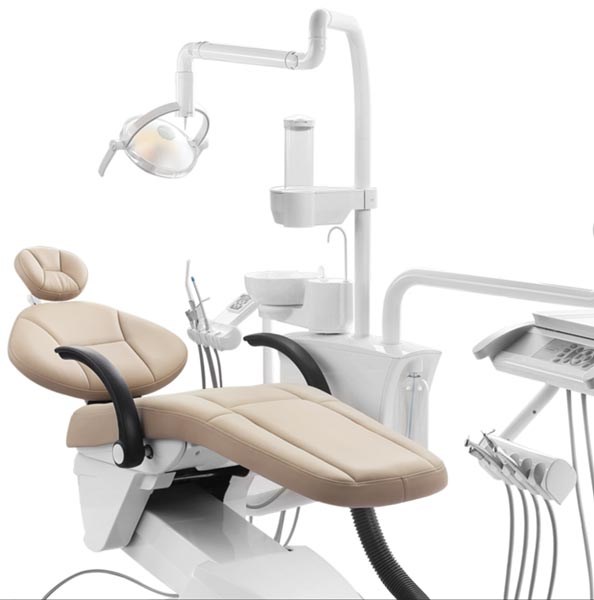
Implantology
Implantology is the branch of dentistry dedicated to dental implants, which are artificial tooth roots replacing missing teeth

Implantology is the branch of dentistry dedicated to dental implants. A dental implant is an artificial tooth root that an oral surgeon or implantologist places into your jaw to hold a replacement tooth or bridge. Dental implants are an ideal option for people in good general oral health who have lost a tooth or teeth due to periodontal disease, an injury, or some other reason.
While high-tech in nature, dental implants are actually more tooth saving than traditional bridgework, since implants do not rely on neighboring teeth for support. They are titanium made screws that are being placed inside your bone, on top of which crowns or bridges are attached with the help of an attachment, a connecting piece that is used as connector between the implant and the crown or the bridge.
In fact dental implants are so natural looking and feeling that make you forget that you ever lost a tooth. They in fact are teeth that can look and feel just like your own!
Read more about dental implants in the “what to expect” and “FAQ” sections.
First visit
When scheduling an appointment regarding implant placement one should always have in mind that the first time will only be an informative conversation between the patient and the doctor. Implant dentistry as the youngest dental branch requires precise diagnosis based on many detailed analysis of the patient’s bone, tissue, life habits, general health problems as well as his/her wishes, determination and persistence in concluding such therapeutic interventions. The surgeon will explain the patient the pros and cons of the implants, the way the procedure is performed, the types of implants that the patient can chose from and will also inform the patient about the necessity of additional surgical interventions necessary for correct completion of the treatment. The surgeon will ask the patient to do orthopantomogramic x-ray as well as CBCT 3D image, so that detailed analysis of the bone in every dimension can be made.
Day of implant placement
The first question that almost every patient asks is if the procedure will be painful? No. The procedure itself is performed under local anesthesia and it is completely pain free. Therefore on the day of the procedure, the surgeon will first and foremost explain the procedure to the patient once again, after which local anesthetics will be administered. Once the anesthetic starts to work, the surgeon with the help of his/her assistant and the dental nurse, will start the procedure. When procedure is finished, sutures will be placed to close the wound and the patient will be given post operation instruction and scheduled for control visits. Depending on the number of implants placed in the patient mouth and the additional bone grafting if required or sinus lift procedure, the intervention itself will last from one hour up to two to three hours.
After treatment
Once the procedure is finished the surgeon will explain the patient what he/she needs to do in the next few days. Slight pain is expected in the next day or two, therefore analgetics such as ibuprofen could be useful. In some cases antibiotics may be prescribed. It is imperative that the patient takes great care of the teeth in the period that follows.
Smoking is forbidden as it puts the implants and its success at big risks. The sutures will be removed two weeks after the placement of the implants.
Teeth placement
Another important information for the patient is that the teeth will not be placed on the implant in the same visit with the implant placement. This is because implants take time from three up to six months to settle in the bone, a process called osseointegration. After the implants are integrated and have enough stability the teeth will be placed on the implants.
Schedule your visit today.
Easily access our services via phone or our
online contact form if you have any questions
or would like to schedule an appointment.
Our team will reply to you as soon as possible.